

Officially back in the founder seat, again, after selling Encharge last year.
We have officially launched Sensorhub – the social listening platform that finds the most relevant conversations across Reddit, LinkedIn, and X.
Here are the numbers since we launched the product last February:
154 users signed up (~20 are test/duplicate accounts and disposable emails)
120 unique projects generated
225,882 relevant signals found (insane)
625 reply drafts generated
6 customers (Around 20 are still trialing, so expecting a potential +1 or 2 customers)
$313 MRR

First revenue in!

Validation Through Marketing
Despite being too early, I think 6 customers out of the gate (only 2 of them are acquaintances) is a validation signal. We’re also seeing consistent interest across the funnel, from top-of-funnel marketing to decent conversion rates.
Frankly, I was surprised by the early traction. Especially considering that we haven’t done any super-large-scale launches (more on this later) or any pre-selling/validation before the launch.
Here's a good time to challenge one of the most repeated pieces of startup advice out there. Validation consultants and lean startup textbooks will tell you: "Pre-sell and validate before you write a single line of code." It sounds sensible in theory. In practice, it never worked for me (see my struggles in the previous posts on this blog) I've since realized why and have a very strong opinion on this topic.
Weeks 7-8: Invalidating Idea(s)

Last week, when I said I was going to try “less salesy messaging” for Tarsis and tap into my close network? Well, I did exactly that.
Cold outreach validation assumes strangers will invest their attention in an unproven idea from someone they've never heard of. When you have nothing to show (no product, proof, credibility), most people will not risk their time. You're asking them to do you a favor.
This is particularly pronounced in the tech space, where operators and decision-makers are drowning in pitches and overpaying for solutions they don’t use. Good luck pre-selling AI marketing tools to marketers.
I think that the 2010 lean startup textbook approach of “sell before you build” still works, but only in more traditional businesses (think analogue spaces that are digitizing) or in niches where you have large authority and connections, so your buyers can take a bet on you as a person, not on your startup idea.
Marketing Campaigns
We did a total of 4 mini campaigns (as we call them) to reach these numbers. 2 successful and 2 unsuccessful.
My approach to this launch was to leverage my LinkedIn profile and my SaaSrank newsletter (around 500 subscribers).
Campaign 1: 1st LinkedIn Engagement Post
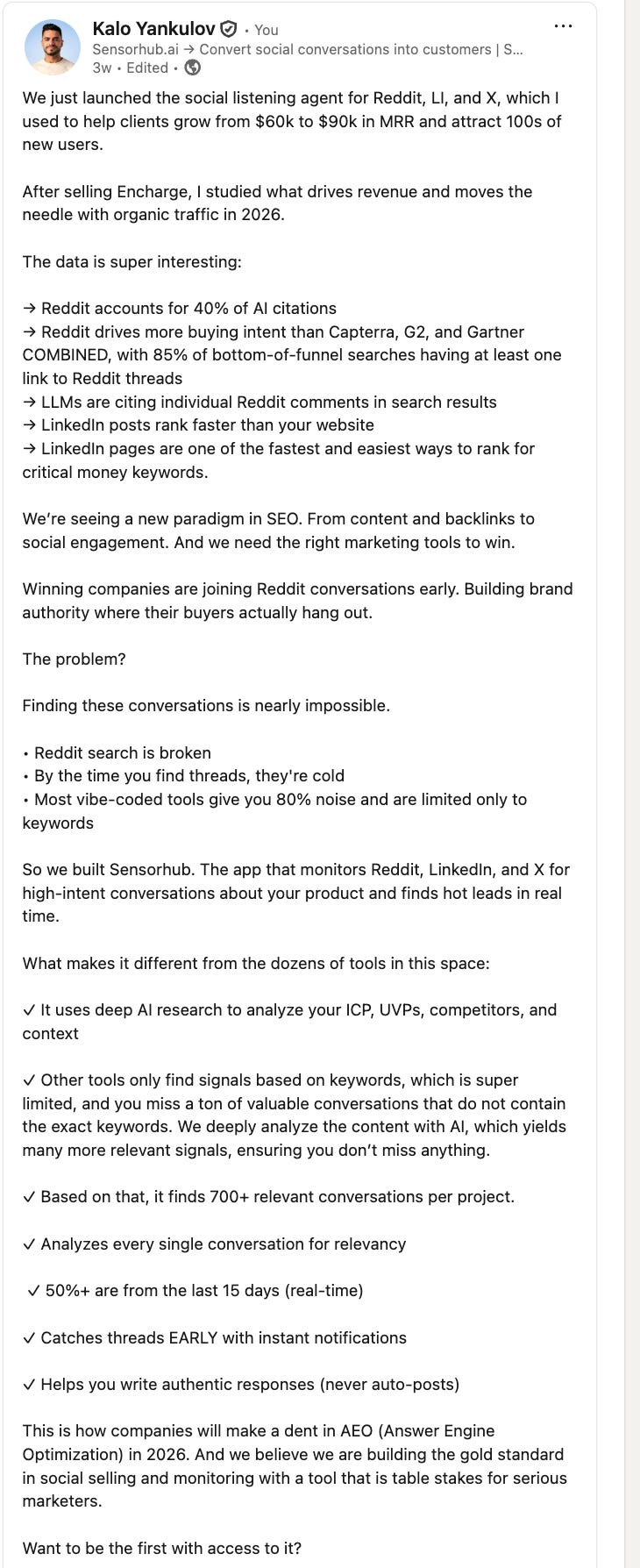
This post was a fail. 1500 impressions. Most comments on it were from friends I levied to engage. We got around 5 signups from it.
It lacked the structure of a successful LI engagement post:
It’s too long
Too complex
Sells the SaaS product (vs. a free agent / leads)
Screenshot of the product (again, too complex to understand)
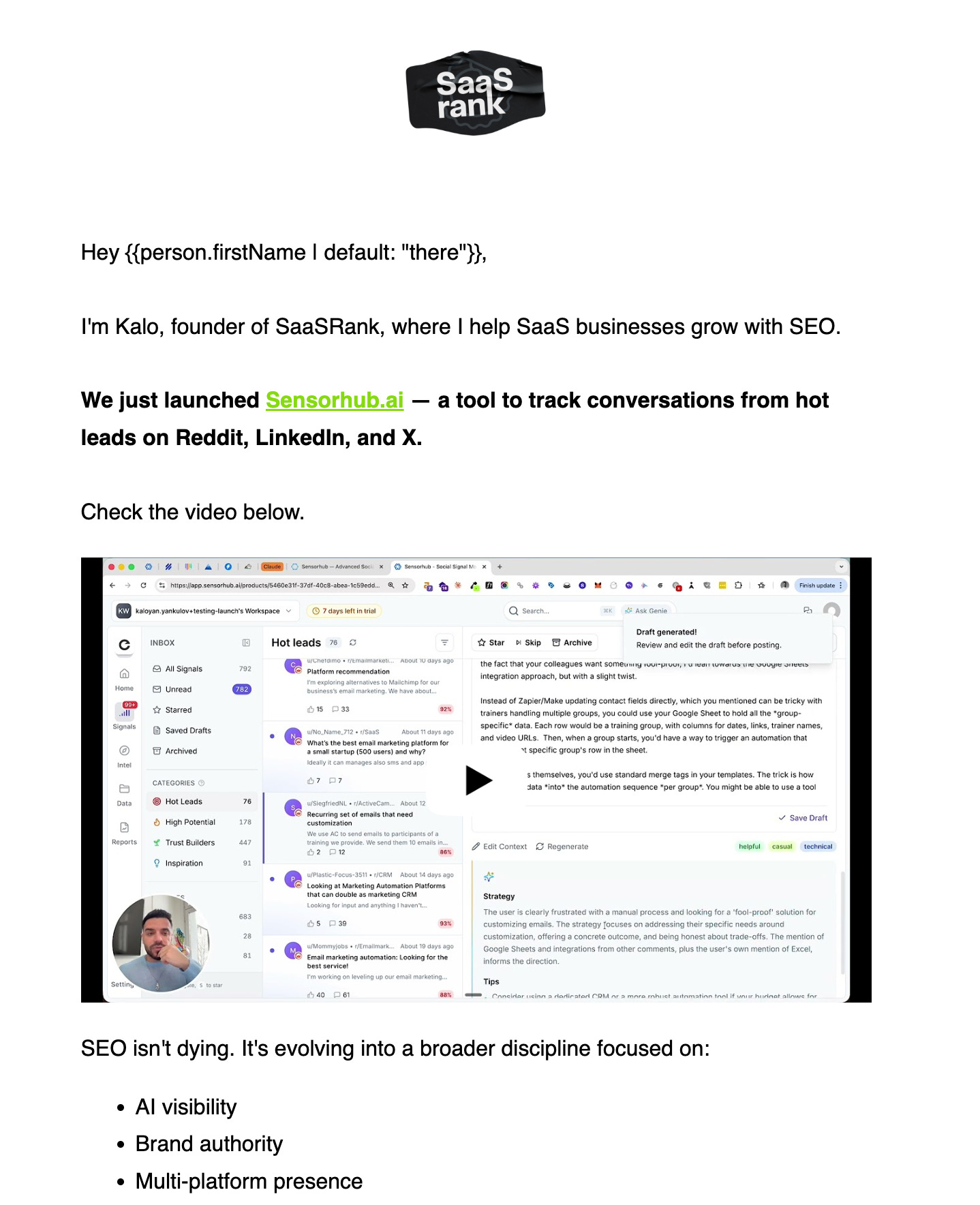
Campaign 2: SaaSrank newsletter announcement
I did create a similar message for my SaaSrank contact list. Explaining what the app does, why they should use it, and offering a discount code. Unfortunately, the result was similar to the LI post. People were not clicking with the message. While the open rate was decent (35%), it seems they didn’t understand the value of what Sensorhub does.
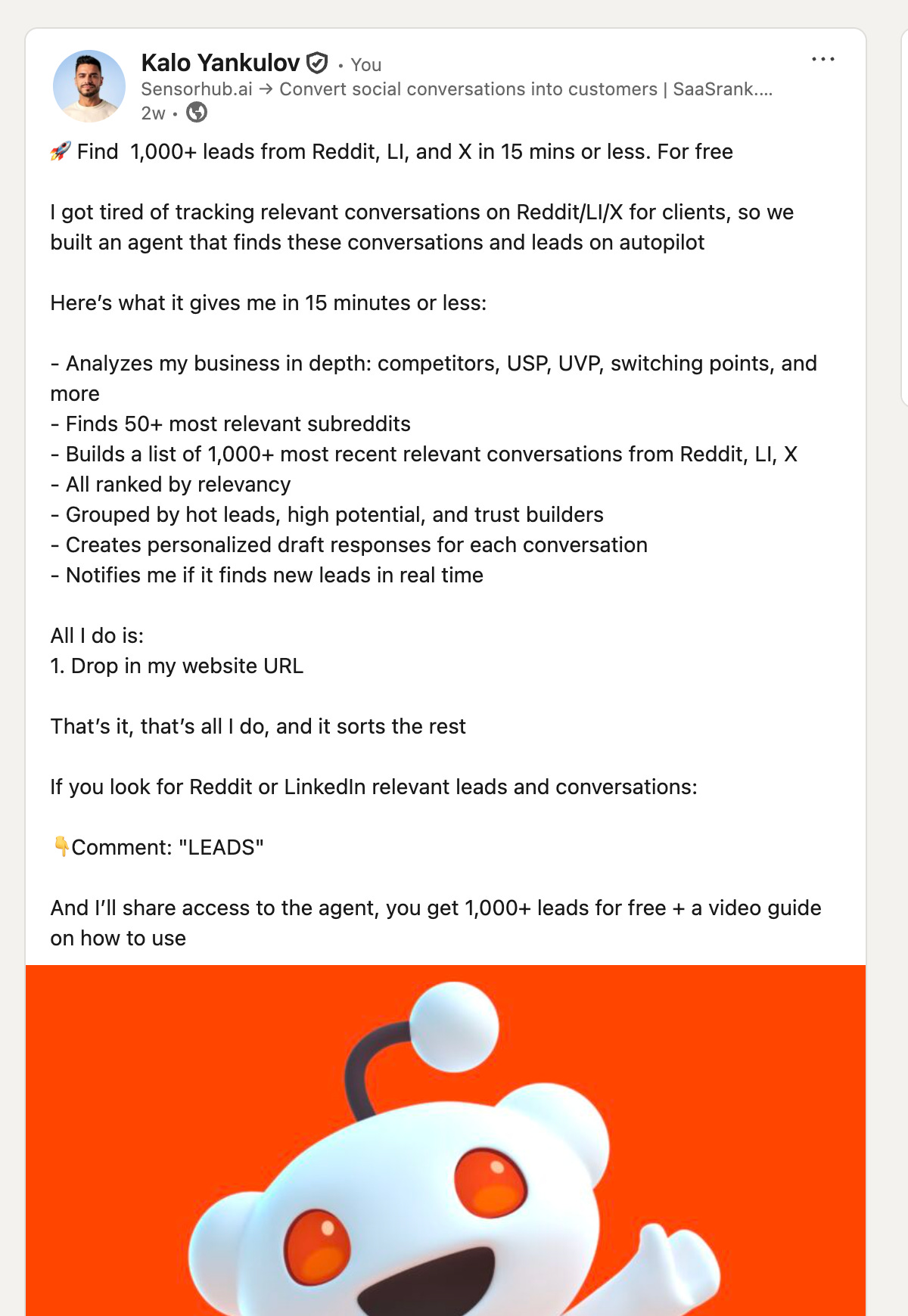
Campaign 3: 2nd LinkedIn Engagement Post
With the first round of campaigns barely moving the needle, discouragement was starting to creep in (didn’t want to scratch yet another startup idea). I took a Hail Mary approach. I went back to the drawing board on the LinkedIn engagement post. This time, applying what actually made high-performing LI engagement posts work:
Made it suuuper short
Presented the product as an “AI agent”
I asked people if they wanted a ton (3,000 to be exact) free leads from Reddit, LinkedIn, etc.
Didn’t mention the SaaS, didn’t show our UI, didn’t explain how it works behind the scenes
Made it as simple as 1-2-3. This is what you do and it takes 5 minutes to get 3,000 leads.
Shared the Reddit logo as an image (vs. product image)
Here’s the post:
Results:
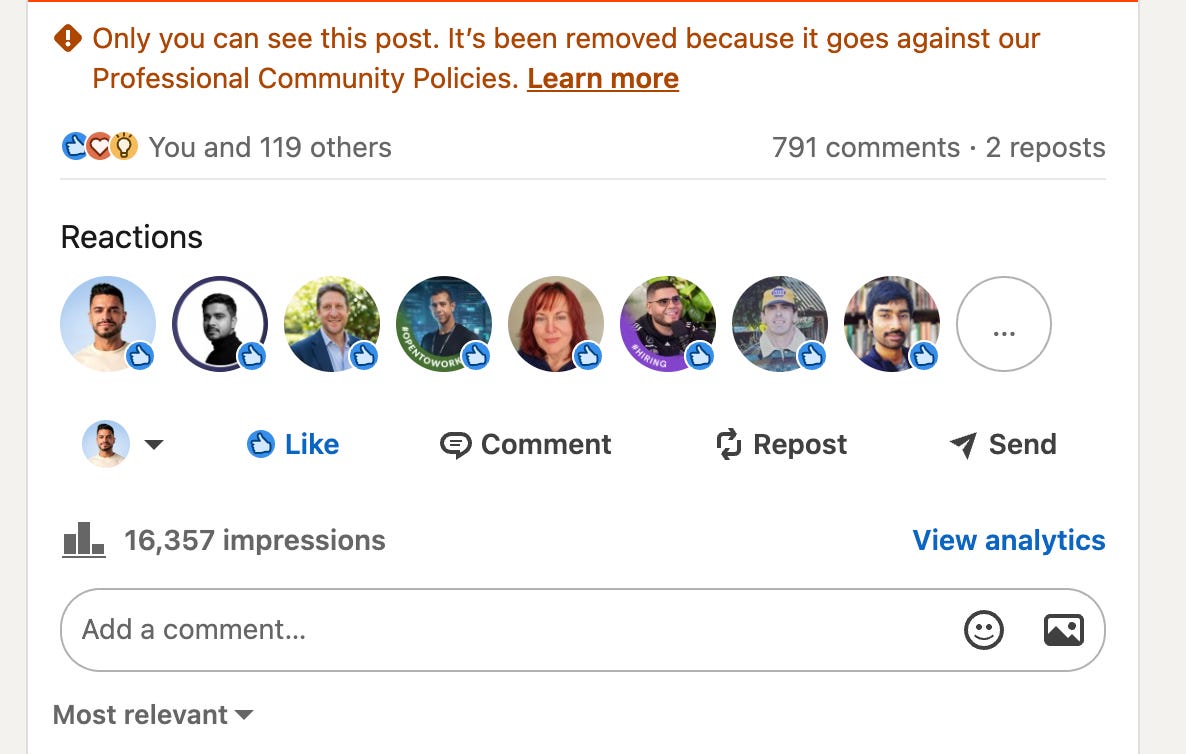
~100 new signups.
Apparently, promoting scraping services violates their Terms of Service. The frustrating part is the timing. With the early momentum the post was generating, I'm confident it could have reached 20–30K impressions and 200+ signups. But that’s a cautionary note on the challenges of building a product in the lead gen space.
Campaign 4: LinkedIn Job Position Announcement
This Wednesday, I decided to officially announce that I’m starting Sensorhub and used LinkedIn, again. Job change posts perform extremely well on LinkedIn, and this one was no exception.
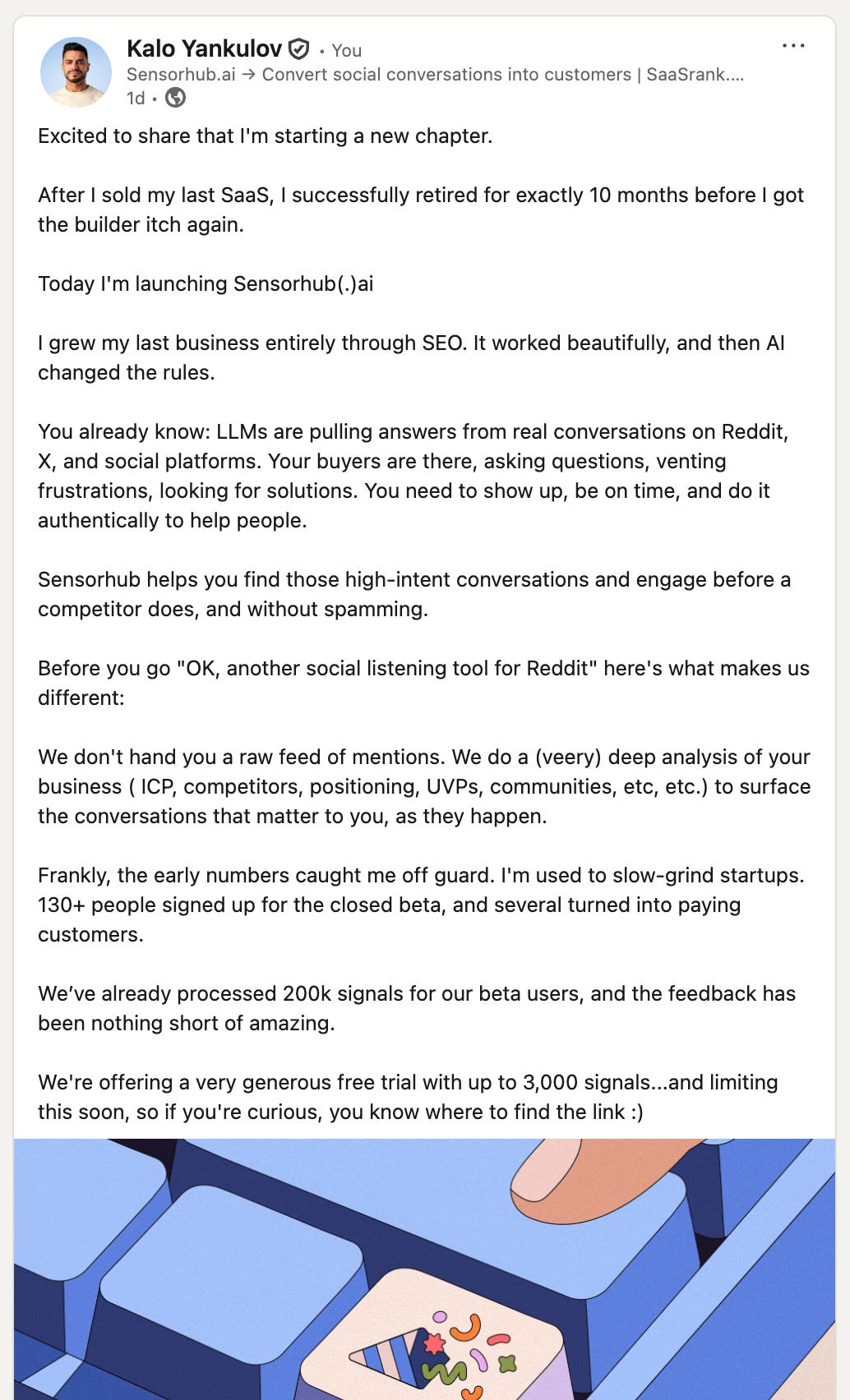
Results:
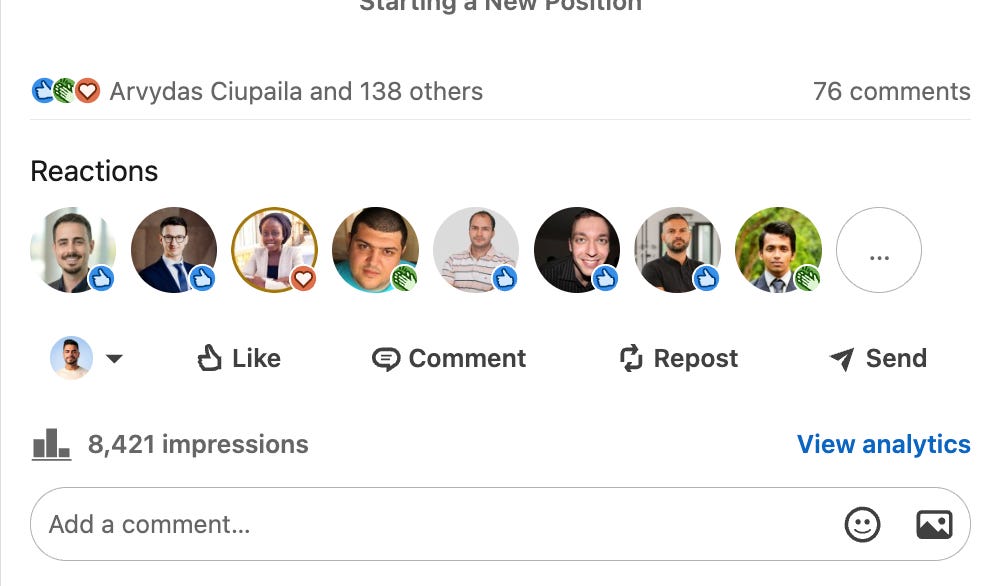
And ~20 new signups (still trialing).
Despite the rocky start, LinkedIn proved to be a surprisingly effective channel for early-stage traction. When you have no domain authority, no content, and no existing audience to speak of, organic social is one of the few levers you can pull. Two posts were enough to generate meaningful signals (pun intended).
The Feedback
What was even more encouraging was the feedback we received. Over 15 people have shared highly positive feedback for the tool, praising the quality of the data, and the volume of signals we find. Our feedback Slack channel is brimming with messages like this one:
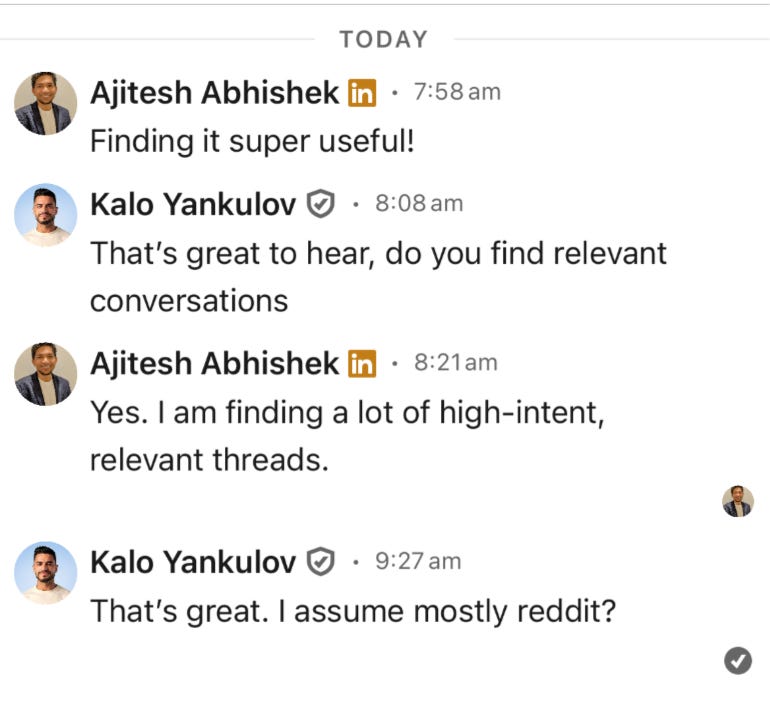
That said, we need to do a better job of talking to people to gauge how they aim to use the tool and what their strategy is. We have very specific requirements for what we need to add or improve in short-term features (keyword filters and better responses), but I’m still not sure what the long-term direction for Sensorhub would be. I see two potential paths: an AEO tool (similar to how OGTool pivoted to AEO) or a social signals platform (expanding social networks and going beyond conversations with more signals). I don’t have the answer yet.
Why Are People Buying Sensorhub?
Sensorhub provides a quick path to value. 0 friction during sign up and 5-10 minutes to the first Aha moment. You put in your website, Sensorhub analyzes your business and finds the most conversations on social media.
Essentially, we sell data. If you need the data and find it valuable, you’ll buy a subscription. This, combined with the hype of AEO/Reddit visibility and targeting problem-aware people (vs. educating the market), is a concoction for quick traction. Of course, only if you have a great product. And we do.
Lubo spent a month improving signal relevance, and, with a hand on my heart, I can confidently say we are the gold standard for finding this type of data.
Of course, there are limitations and drawbacks to this model. The easy-come easy-go type of users. Because the product's value is extracted so quickly and there’s 0 onboarding investment, I expect people to churn at higher rates.
Sensorhub can surface the most relevant, high-intent conversations happening right now. But knowing you should engage and actually doing it consistently are two different things. You need to consistently follow these subreddits, provide authentic help, and be a valuable asset to the community. This takes time.
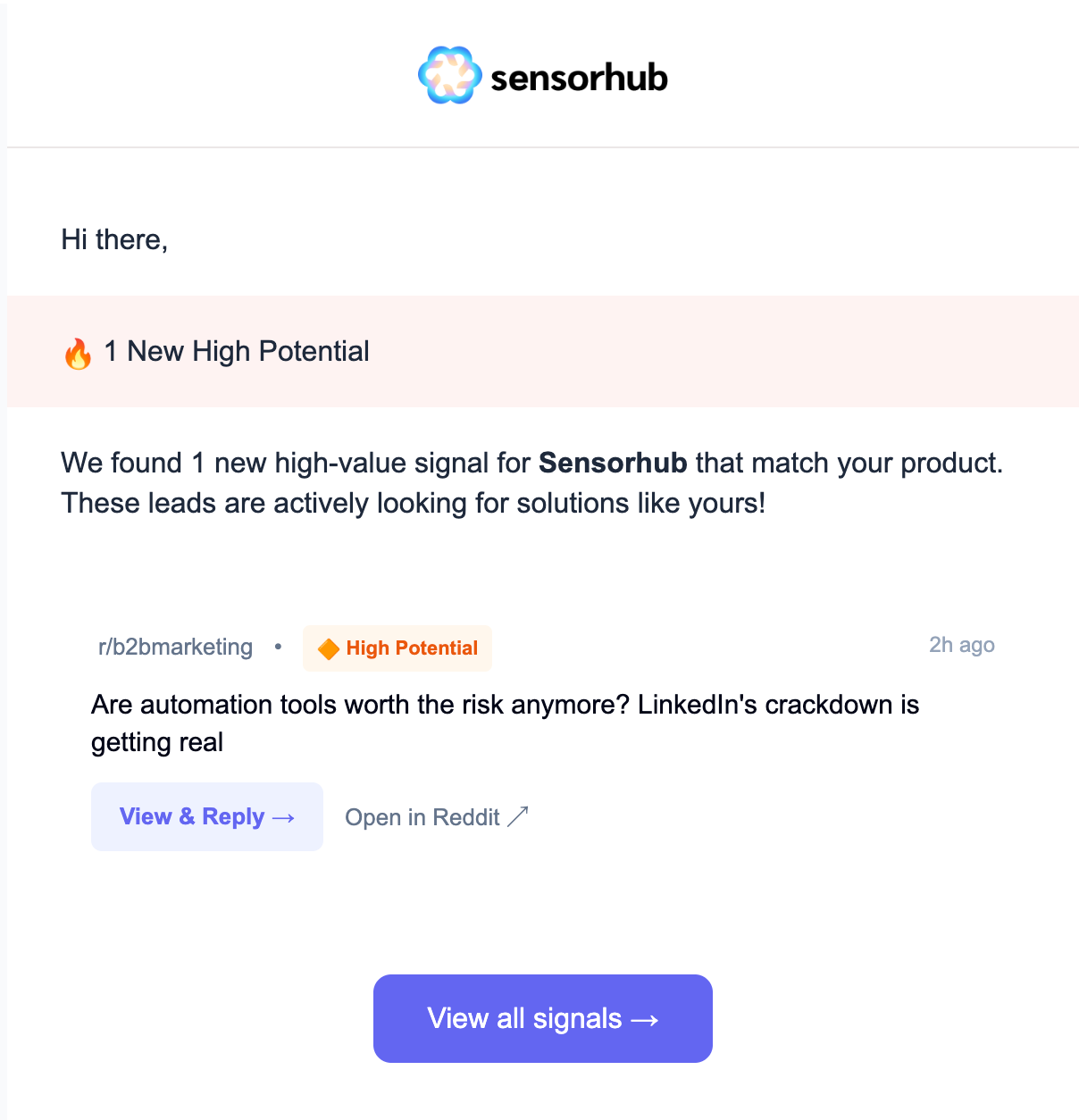
We have a few ideas for closing this gap. A managed service offering is one option, where we handle the engagement on behalf of customers, but that’s a services business, not a SaaS one. On the product side, we’ve already built great notification emails that create a re-engagement loop and pull users back into the app, but that’s not enough on its own. Making users successful (not just informed) is the next problem we need to solve, and this will take time, too.
What’s Next for Sensorhub?
On the product front, we’re currently working on launching the most pressing features – signal filters by keyword(s) and time range.
For marketing, I’m planning to slowly devise and roll-out long(er) term marketing strategies, including content marketing/SEO, use Sensorhub to build authority and visibility on Reddit, weekly webinars, and more. Still have to figure out the specifics on these initiatives.
Collect more customer feedback.
All-in-all, it was a successful (soft) launch in my books, and there are still many uncertainties, but these quick wins are enough fuel to get us to the next stage.
Stay tuned for more updates!